Adventures in writing with Lisa Jensen, Author, Columnist and Film Critic
Sunday, January 21, 2018
STOP THE PRESSES!
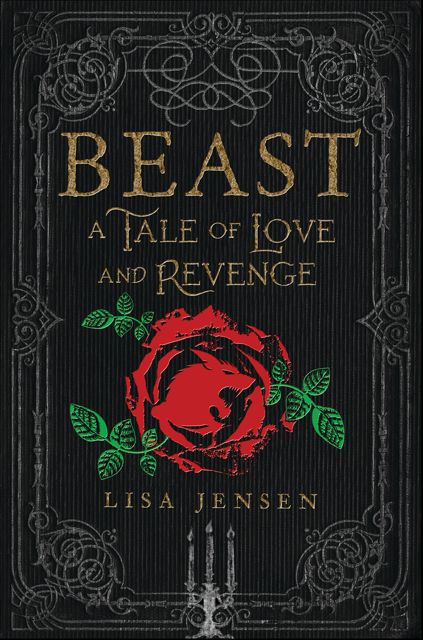
Beyond delighted this week to receive this Beast endorsement from the great Laurie R. King:
When is beauty shaped by ugliness? When does a simple fairy tale give way to the dark textures beneath its surface? When Lisa Jensen takes it on, that’s when. Beast: A Tale of Love and Revenge is a love story, and so much more.
— Laurie R. King, New York Times bestselling author of The Beekeeper's Apprentice
My editor at Candlewick is so excited, they're going to redesign the dust jacket to fit the quote in.
Thanks, Laurie!
Saturday, July 25, 2015
MIND FIELD
In the canon of famous literary characters, few have been so gleefully adulterated over the years as Sherlock Holmes.
The brilliant, eccentric "consulting detective," first conceived of by Arthur Conan Doyle in the1880s, has proved irresistible to countless other writers trying their hands at Holmesian-style tales, among many other multimedia adventurers.
In the famous series of mystery films of the '40s, Holmes was enlisted in the fight against Hitler. Two popular current TV series (the marvelous Sherlock, and Elementary) update Holmes to the present day.
So, the new movie, Mr. Holmes, joins a longstanding tradition of adapting the character to suit the needs of a new author or agenda, presenting an elderly Holmes in retirement attempting to solve one last case.
![]() |
| Hattie Morahan with McKellen: one last case |
Based on the Mitch Cullin novel, A Slight Trick of the Mind, it reunites star Ian McKellen and director Bill Condon, almost two decades after their successful collaboration on Gods And Monsters.
It is, in many ways, a lovely, lyrical film about aging, loss, and redemption, although it settles for an overall tone of wistfulness, instead of the deeper resonance it might have had.
The framing story begins in 1947, with McKellen's craggy, truly ancient-seeming Holmes returning to his stone farm cottage and bee hives on the Sussex Downs after a trip to postwar Japan. Retired from detecting for the past twenty-five years, he's gone to Japan in search of a rare herbal compound he hopes will improve his declining mental faculties.
![]() |
| He was a teenage Sherlock |
After years of enduring Dr. Watson's fictions about him, Holmes is determined to write a story of his own.
Holmes' household is run by his Irish housekeeper, Mrs. Munro (Laura Linney), a war widow, whose young son, Roger (Milo Parker) is an avid reader and fan of Watson's stories.
But in addition to simply telling his story, Holmes is struggling against his diminishing powers to remember what happened in his last and only unsolved case—and why it was the reason he quit the profession.
![]() |
| Art imitates art imitating life: Mckellen and Rowe (onscreen) |
The cross-currents underlying the plot are not always clear, nor is the central encounter of the film the emotional epiphany it needs to be.
(But there is a sly in-joke at the cinema with Holmes watching a black-and-white film about his exploits where the onscreen Holmes is played by actor Nicholas Rowe—who starred in Young Sherlock Holmes back in 1985.)
Mr. Holmes is a thoughtful, atmospheric addition to Holmesiana. Still, I hope the next time the movies want to do something really original with Sherlock Holmes, they discover the novels of Laurie King.
(Read more)
Tuesday, May 7, 2013
MYSTERIOUS REGIMENT of WOMEN
If you are interested in the intersection between the two, get ready for "Higher Mysteries," a panel discussion coming to the downtown library next week featuring our own Laurie R. King and three other crime-writing women on the topic, "Faith and Theology in Crime Fiction."
The event is the 2013 installment of the King Lecture Series, an annual program dedicated to the work of the late UCSC History and Comparative Religion professor Noel Q. King to promote dialogue between faiths. This year's lecture is actually a quartet of authors, a Mysterious Regiment of Women (or Regiment of Mysterious Women?), whose fictions are fueled by issues of religion and theology.
Sharan Newman writes the marvelously atmospheric Catherine LeVendeur mystery series set in medieval France. Once a novice under the famed abbess Heloise, Catherine investigates mysteries that often involve the delicate relations between Christians and Jews (the secret faith of Catherine's father) in twelfth-century France.
Zoe Ferraris lived for nearly a year in Saudi Arabia with her then-husband and his family of Muslim Saudi-Palestinians. Her novels set in the city of Jeddah feature a female lab technician in the coroner's office helping to solve crimes against women while battling prejudice and extreme religious conservatism in a culture where women's lives (and deaths) are shrouded in mystery.
In the novels of Julia Spencer-Fleming, ex-Army helicopter pilot Clare Fergusson becomes the first female Episcopal priest in a small town in upstate New York. While attempting to prove herself to more conservative members of her flock, she must also cope with her kindling attraction to the local (married) police chief, with whom she embarks on a series of criminal investigations.
And, of course, Laurie King's audacious and entertaining series introduces former theology student Mary Russell as protege, investigative partner, and ultimately wife to none other than Sherlock Holmes.
Sponsored by UCSC's Noel Q. King Memorial and Santa Cruz Public Libraries, "Higher Mysteries" takes place Tuesday evening, May 14, 7 pm, at the downtown branch of the SCPL at 224 Church Street.
Oh, and if you'd like to do a little prep reading to get in the mood (and who doesn't want another excuse to read?), here are some suggested titles:
Zoe Ferraris: Finding Nouf and City of Veils
Laurie King: A Monstrous Regiment of Women and A Darker Place
Sharan Newman: The Outcast Dove and Strong As Death
Julia Spencer-Fleming: In the Bleak Midwinter and Out Of the Deep I Cry
Friday, August 31, 2012
CLUELESS in MOROCCO
Next week, her new Mary Russell-Sherlock Holmes suspense novel, Garment Of Shadows hits bookstore shelves. It's the twelfth entry in the immensely popular series about the aging, but still brilliant and vigorous detective, and his smart, simpatico younger bride and companion in adventure. It's also the fourth Russell-Holmes novel in a row in as many years.
Hot on the heels (or perhaps the stern) of last year's rollicking Pirate King, the new novel eschews that novel's salty, serio-comic hijinks on the high seas for something completely different: amnesia. Scant days after separating from the movie crew in Morocco at the end of the last book, Mary wakens with a throbbing head, with blood on her hands, in a strange room dressed in men's robes—with no earthly idea who she is.
As a variety of handy skills come instinctively to her—climbing out windows, scaling down walls, reaching automatically for weapons long since taken off her, stealing food and coins (and above all, the instinct for self-preservation)—she makes her way into a teeming marketplace. She recognizes that she is within the walled part of the city (or medina) of ancient Fez, the second largest city in Morocco. But what she is doing there, and how—and to whom—she is to return home again are for the reader and Mary herself to find out.
Laurie King will be at the Capitola Book Cafe on Wednesday, September 5, at 7:30 pm, to read and sign copies of Garment Of Shadows. Or, you can catch her later at Bookshop Santa Cruz, Friday, September 14, at 7:30 pm.
In the meantime to get in the proper mood, check out Laurie's Pinterest page (that's one of her images, above), all abloom with the exotic colors, food, spices, tiles, and cats of Fez!
Wednesday, September 14, 2011
PLEASURE CRUISE

Acclaimed Corralitos mystery writer Laurie R. King has shepherded her husband-and-wife detective team through some dark, sobering themes in her last couple of books—religious fanaticism, moral corruption, even human sacrifice. Her latest novel, Pirate King, takes another tack entirely. For this eleventh outing in her popular mystery series, King places her intrepid heroine, Mary Russell, and her equally redoubtable husband, Sherlock Holmes, smack in the middle of a witty, lighthearted romp of an adventure involving the early days of the silent film industry, Gilbert and Sullivan operettas, and, of course, pirates.
King combines the usual scholarship, travelogue, feminism and skullduggery readers have come to expect from her Russell-Holmes mysteries with swashbuckling on the high seas and a healthy dose of absurdist hilarity—along with the ever-deepening affection and camaraderie between Russell and her much older, yet still vigorous spouse. The combination is just about irresistible. Fans can get a taste of this tall tale when King reads from her new novel next Tuesday, September 20, at Bookshop Santa Cruz.
Pirate King begins with Russell craving nothing more than a few weeks of leisure among the books and bees at the Sussex cottage she and Holmes share. Instead, she is invited by Inspector Lestrade of Scotland Yard to insinuate herself into the employment of a London motion picture company that appears to be leaving a trail of mayhem in its wake. Maddeningly encouraged by Holmes, and fearing the imminent arrival of Holmes' alarming brother, Mycroft, for an extended visit, she reluctantly takes the assignment. (Read more)
(Laurie King will read from and sign copies of Pirate King Tuesday, September 20, at Bookshop Santa Cruz, 7:30 pm.)
Tuesday, September 6, 2011
WHEN RUSSELL MET HOLMES

Oh, the audacity of Laurie King.
In only her second novel, The Beekeeper's Apprentice (1994), she had the nerve to tinker with one of the greatest legends in all of mystery fiction. The beekeeper in question was Sherlock Holmes, a greying, but no less acute and acerbic man in his mid-fifties retired to a country cottage on the Sussex Downs ca. 1915 to raise bees, under the watchful eye of his faithful housekeeper, Mrs. Hudson.
His apprentice-to-be was a 15-year-old orphan from a neighboring cottage who was about to enter Oxford University. This precocious youth was independent, analytical, fiercely intelligent—and female. Her name was Mary Russell. Holmes, along with King's soon-to-be-legion of readers were pleased, if astonished, to recognize an intellect as fine, prickly, and impatient as Holmes' own, and the young woman was glad to rise to the challenge of his tutelage.
Over the course of King's popular mystery series, Russell and Holmes (as they always refer to each other, comrade-style) have become not only best friends and partners in wit and detection, they are plausibly married as well. That Russell embodies the generation of "new" women rising phoenix-like out of the ashes of the war-ravaged Old World adds another subtle layering to the delicate balance of their relationship as they strive for common ground and equal footing.
Many of their adventures have been dark, indeed. But in her new novel, Pirate King, the eleventh outing in the series, King combines the usual scholarship, travelogue, feminism and skullduggery readers have come to expect with swashbuckling on the high seas and a healthy dose of absurdist hilarity. The combination is just about irresistible! Fans can get a sneak preview when Laurie reads from her new novel this Thursday (September 8) at Capitola Book Cafe, 7:30 pm.
(Above: UK paperback cover for The Beekeeper's Apprentice, looking very Erte!.)
Sunday, August 21, 2011
PIRATE KING PREVIEW
Want to get in the mood for Laurie King's new Mary Russell-Sherlock Holmes novel, The Pirate King? Here's the new trailer for the book recently posted on Laurie's site, full of atmosphere, wry wit, and of course, pirates!
Btw, how hysterical is it that movie-style trailers are now made to sell books? It's totally appropriate in this case; Laurie's book is about the silent movie industry, and this trailer incorporates plenty of vintage B&W pirate movie footage to provide the necessary action. (Even in trailer form, the point of a moving picture is to move.)
So long as you have a plot dripping with intrigue, an irresistible character or setting, or some other hook that can be effectively exploited, visualized, and sold in a 2-minute trailer, you're good to go in the brave new world of book promotion.
Meanwhile, not only authors and other creative artists, but their characters and/or subjects are now required to have a blog, a Facebook page, and a Twitter account. It's one thing to discover a FB presence for historical figures like William Shakespeare, King Henry VIII, or the Plantagenet Edward II (who has an active Wall full of pics and comments, even though he's been dead since 1327). But fictional characters are swarming all over social media like bees on Holmes's hives.
I discovered this with a vengeance when I posted a blog about the Disney cartoon feature Tangled last December—in which I riffed on how Disney princesses and their heroes (in this case, Rapunzel and her rascally thief-turned-hero Flynn Rider) have evolved over the decades. Within a couple of months it had more hits on this site than anything else I'd ever posted. I couldn't figure out why until I followed a couple of links backward to their sources and discovered that Flynn Rider, has his own thriving Facebook page, complete with cocky updates from the virtual man himself, and swooning pre-teens (one assumes) writing mash notes on his Wall. Who knew? These days, real-life reality is just another option (and not a very popular one) on the massive virtual smorgasboard.
Thursday, August 11, 2011
PIRATES, POSTERS, & KINGS (OH, MY)
This kills me. Santa Cruz's own Laurie R. King has written a pirate novel!
Or, at least, her new novel, "The Pirate King" (due out September 6), places King's brilliant detective series heroine, Mary Russell, and her husband, Sherlock Holmes (no slouch himself when it comes to solving mysteries), behind the scenes in the silent movie industry during the making of a pirate swashbuckler, ca. 1924. Bookshop Santa Cruz will be hosting a reading by King on Tuesday, September 20. In the meantime, check out King's website for details about the 10 weeks of piratical shenanigans and contests she's holding during the run-up to publication day.
One of the contest prizes is a copy of this fabulous faux movie poster being used to advertise Laurie's book. (It's not the book jacket cover, but a separate promo item.) This image is based on a classic Howard Pyle illustration, but the whole concept harks back to the glory days of silent movie posters.
Of course, pirates and silent movies are two of my favorite subjects. I especially love the idea that (according to the preview on Laurie's website) the maniacal filmmaker in her book gets involved with real pirates to lend his film authenticity. This makes perfect sense if you know anything about the early days of silent filmmaking. In particular, the superb 13-part video series by Kevin Brownlow, Hollywood, documents the outrageous DIY spirit of intrepid movie pioneers who were making up the rules as they went along. (If the script called for a fistfight on the wings of a biplane, for instance, they sent two actors up in a biplane with a camera strapped on the wing.)
The most famous pirate movie of the silent era is The Black Pirate, starring the inimitable Douglas Fairbanks. By 1926, Fairbanks was such a huge star, he got name-above-the-title billing on the poster art; his buoyant athletic brio was always the soap his movies were selling.
But according to the strict moral code of the era, a pirate couldn't be a hero, so when Fairbanks, the most popular actor in Hollywood, wanted to make a pirate picture, he had to play a disguised nobleman who joins the pirate crew for a "noble" reason—to avenge himself on the scurvy dogs who caused his father's death. Through this device, Fairbanks got to have all the fun of playacting the pirate life without tarnishing his heroic image.
This is an all-Fairbanks production: he wrote the script (under his alias, Elton Thomas) and sketched out every shot before a director even came on board. He revels in plundering every pirate cliche in the canon, from buried treasure to walking the plank. And in one of the most memorable of all silent movie stunts, he climbs out on a yard, plunges his knife into the top of the sail, and slides all the way down to the deck by grasping the handle as the blade slices the sail in two. Yowza! Don't try this at home, kids. (Read more)
Meanwhile, other silent filmmakers were pillaging all the same source material that later became vehicles for Errol Flynn and his swashbuckling brethren in the talkies. The most famous of Flynn's pirate movies is a gritty and rousing adaptation of Rafael Sabaini's Captain Blood, made in 1935. (Arguably, by me, the best pirate movie ever made.) But there was also a lavish silent version, starring one J. Warren Kerrigan, made in 1924.
Only about half an hour of footage from this film exists today. But this cool poster remains. It's unusual for a pirate movie in that it features no ship, no sea, no Bounding Main; it's all about mood and tension. I just love that looming shadow figure. This poster tells you: prepare to be thrilled!
Apparently, this early version of The Sea Hawk (also produced in 1924), stuck far more closely to the original Sabatini novel than the more famous Errol Flynn/MGM version made in 1940. Milton Sills stars as an Elizabethan sea captain framed for a crime and sold into slavery to the Spanish; when Muslim corsairs eventually board his ship and free him, he renounces Christianity and transforms himself into the Algerian pirate, Sakr-el-Bahr—The Hawk of the Sea.
This was obviously a plot point that wouldn't wash in 1940s Hollywood. But this terrific poster conveys all the lush Eastern exoticism of Sabatini's tale.
Robert Louis Stevenson's evergreen pirate classic, Treasure Island, got the silent treatment in 1920, from French-born filmmaker Maurice Tourneur. (Father of Jacques Tourneur, who became a Hollywood film director of note in the '40s.) True to its era, this film featured a female actress in the role of boy-hero Jim Hawkins. More intriguing, the great Lon Chaney was on board as eerie pirate, Blind Pew, who gets innkeeper's son Hawkins involved in the pirate plot. (A couple of stills exist of Chaney in costume for the role, but the film itself is lost.) But this poster doesn't care about the stars; it's selling a rip-roaring, boy's own pirate adventure!
Setting down Russell and Holmes in the midst of all this lively ferment as the movies struggle to invent themselves sounds like a brilliant idea to me. Me timbers are shiverin' already!