Thursday, May 30, 2013

KISS of LIFE

If you love fairy tales, in all their infinite variety, don't miss Blancanieves, Pablo Berger's flavorful retelling of Snow White with a decidedly Spanish twist. That it's a silent film (no spoken dialogue, but a vivid musical soundtrack), shot in luminous black-and-white, only adds to its distinction. By making the story so uniquely his own, Berger proves just how universal the enduring and endlessly adaptable fairy tale format can be.

Snow White was the "It" girl of the moment last year with two separate Hollywood productions vying to bestow the kiss of life on the old tale. But Mirror Mirror and Snow White and the Huntsman failed (the one being too giddy, the other trying to graft on too much epic fantasy action) by attempting to recreate some kind of familiar, if nebulous, fairy tale realm.

Berger shows how to do it correctly by setting his version of the tale in a very specific era and culture—Seville, Spain, ca, 1920. It's a heady milieu rife with flamenco music, bullfighting, and women's emancipation.

The story begins with the heroine's parents. Her father is a famous matador, Antonio Villalta  (the elegant Daniel Giménez Cacho); her mother, Carmen (Inma Questa), is a beautiful flamenco dancer. On the day Antonio suffers a paralyzing accident in the ring, Carmen goes into labor early and dies giving birth to their daughter, called Carmencita.

Antonio can't bear to look at the baby, who is whisked off by her grandmother (Angela Molina) to be raised. Meanwhile, the scheming nurse, Encarna (Maribel Verdu), worms her way into the household of wealthy but now helpless Antonio, and drags him into marriage.

Years later, on Carmencita's Communion day, her loving abuela dies, and the young girl (the winsome, vivacious Sofia Oria) is sent to live in her father's household.

Here, filmmaker Berger borrows a page from Cinderella as her stepmother, Encarna, shuts up Carmencita in the cellar, cuts her hair, and puts her to work as the household drudge. Her only friend is a chicken—until the day she accidentally wanders into her father's room. Smitten with the girl who now reminds him so much of her mother, Antonio rouses himself out of his emotional doldrums; he reads her fairy tales and teaches the eager girl the art of bullfighting.

Of course, Encarna finds a way to permanently squelch their growing bond, and the now young adult Carmencita (Macarena Garcia) finds herself cast out into the world. She's revived from an attempted drowning by a troupe of dwarves with a traveling torero act; they stage mini bullfights with horned calves.

She can't remember who she is (they call her Blancanieves, i.e.: Snow White), but she joins the act when she proves she knows her way around the ring. (Animal lover alert: no bulls are killed in this movie; it's all about the artistry of the cape.)

Soon, the young lady matadora is the toast of Seville—famous enough to once again attract the notice of the jealous and powerful Encarna.

Verdu is great nasty fun as Encarna, swanning around in her chic clothes with matched pair of greyhounds, seeking advice from her mirror image in a reflecting pond. As Blancanieves, both little Oria and fresh, poised Garcia are spirited and appealing, but never sticky-sweet. This girl isn't sitting around, waiting for her prince to come; she's, er, grabbing life by the horns!

Berger has an eye for striking images (time passes as a full moon dissolves into the Communion wafer on the tip of Carmencita's tongue), and an ear for evocative music—his score includes flamenco guitar, propulsive hand-clapping, and the occasional haunting strains of a Theremin.

And these are definitely not your Uncle Walt's dwarfs, from the cheerfully cross-dressing Josefa (Alberto Martinez) and pompous, embittered Jesusin (Emilio Gavira), to soulful Juanin (Jinson Añazco)—who is far more substantial than any typical storybook prince.

Berger's ending will be controversial. It seemed to me to occur about five minutes short of actually resolving the story that Berger sets up with such an inventive flourish. (Although it does work as a sly, cautionary warning to artists to never, ever sign a contract for life with a diabolical agent, as Blancanieves does here.) But at least the open-ended finale adds another layer of intrigue to a truly enchanting film.

Friday, May 24, 2013

TREK on TRACK

Characters, action, humor, surprise fuel 'Star Trek Into Darkness'

J. J. Abrams has figured out the secret to building a better franchise: treat the source material with respect, but not reverence, don't be afraid to tweak its foibles, jazz it up with a lot of youthful energy, and, most of all, have fun with it. This is the policy that made his first Star Trek prequel such a hit in 2009, and Abrams and his team continue to revitalize the series with the fast, punchy, slyly funny, yet surprisingly touching Star Trek Into Darkness.

Working again with the writing team from the first film, Roberto Orci and Alex Kurtzman, abetted here by co-scripter Damon Lindeof, Abrams maintains the same balance of irreverence and affection for Gene Roddenberry's beloved characters and the idealized, multi-cultural future they represent.

Then he grafts it all onto a kick-ass action narrative that hurtles along at warp-speed and has viewers literally holding on to their seats. True, it's too easy to get lost in the labyrinth of the plot, and some of the gigantic action sequences devolve into silliness, but mostly it's a fresh and satisfying ride.


The film begins in the middle of the action, with brash young starship Captain James Kirk (well-played by Chris Pine) breaking a few Starfleet rules to spring his First Officer, Spock (the excellent Zachary Quinto), out of an erupting volcano on a primitive planet.

(Berated for not following the Prime Directive, Kirk shrugs, "Aw, c'mon, Spock, they saw us. What's the big deal?" as awed native people on the ground draw an image of the Starship Enterprise to worship.)

When terrorist explosions rock the very core of Starfleet HQ, Admiral Marcus (Peter Weller) dispatches Kirk and the Enterprise unofficially to go after the man responsible, called John Harrison (the always marvelous Benedict Cumberbatch), a genetically-engineered superman with a particular grudge against Starfleet. (Read more)

Tuesday, May 21, 2013

MUCHO MUCHA

An Art Nouveau adventure in Prague with the Inconstant Traveler

From my previous posts about our adventures in Vienna and Prague last summer, readers might get the mistaken idea that all the art was in Vienna.

Not true: in addition to all its other charms, the magical city of Prague is alive with art. Centuries-old carvings, corniches and whimsically painted facades decorate just about every other building in the city.  An amble about the "New Town" section (which dates to around the turn of the last century, as opposed to the adjacent Old Town, which dates back to medieval times) is a feast of Art Nouveau architecture and decoration.

And then there's the Mucha Museum. Just off the main shopping boulevard, Na Prikope, in New Town, a couple of blocks down Panska Street, the museum is dedicated to the life and extraordinary work of Czech native son, Alfons Mucha, whose flowing, ornate style is among the most recognizable of all Art Nouveau artists.

And what a great museum it is! All on one floor, and beautifully laid out so you can follow and appreciate the chronology of Mucha's career.

An early popularizer of organic Nouveau forms, his first success was as a poster artist for Sarah Bernhardt in Fin de Siecle Paris. His revolutionary litho poster for her production of "Gismonda" (1894, above) was such a sensation, stealthy Parisian collectors crept out in the middle of the night to razor them off the kiosks!

During his Paris years, while becoming the premiere designer of advertising posters (for cigarettes, bicycles, tea, biscuits, and, of course, champagne), Mucha also produced illustrations, portraits, and decorative panels—the latter in four-part series, like "The Four Seasons," or "The Four Times of Day" (Matin, Jour, Soir, Nuit).

I love this Claire de Lune, from Mucha's four-part "The Moon and Stars" series. These pieces are not on display at the museum,  but I fell in love with the image on this bookmark in the gift shop and had to have it!

In 1910, Mucha rediscovered his roots, returned to Prague, and began creating posters and artwork celebrating Czech history and folklore, culminating in his 20-panel "Slav Epic" series of oil paintings.

These massive works are off-site, housed in the National Gallery's Veletrzni Palace, but the museum displays a large study for one of them, the haunting, enigmatic Star (or Winter Night), in which a Russian peasant woman embraces her fate on a snowy night.

Mucha's decorative lines and sinewy forms are exquisite, and it's fascinating to see some of his original drawings on display next to the printed poster versions.

Sketches and sketchbooks are also viewable in glass cases featuring the artist's designs for jewelry, furniture, and decorative motifs.

At the end of the exhibit, there's even an informative 15-minute biographical video—in English!


Stroll a few short blocks away and prepare to be dazzled by the Municipal House (Obceni Dum), begun in1906 and opened in 1912.

This block-long corner building situated on Namesti Republiky is an Art Nouveau masterpiece, from its gorgeous glass, and iron filigree, and painted and sculptural exteriors to its luscious tiled and stained glass interiors.

Among other things, the building houses three elegant restuarants and cafes—including the very cool Americky Bar in the basement—and the Smetana Concert Hall featuring Mucha-painted lintels and murals.

This is the principal venue for the Royal Prague Orchestra.

The day we visited New Town, we stopped in at Tesco (sort of the Czech Costco) on the way back to our apartment for more Bohemian Sekt ("sekt" being the all-purpose Eastern European word for champagne-like sparkling wine; we sampled sekt in Vienna as well).

Imagine our delight to find this bottle of Mucha Sekt!

The label is a lovely reproduction of a vintage Mucha champagne poster design.

Of course, we had to try it! And, of course, I had to bring the bottle home with me, in memory of our Mucha Day in Prague!

Thursday, May 16, 2013

ALL THAT JAZZ AGE

Baz Luhrmann delivers a Deco-licious, surprisingly effective 'Great Gatsby'


With Baz Luhrmann in the driver's seat, the slick, shiny roadster that is The Great Gatsby could go either way. This meeting of the florid visual stylist (Moulin Rouge) and F. Scott Fitzgerald's classic American novel of the Jazz Age might be a head-on collision of inappropriate style, anachronistic music, and frantic bombast over substance. Or it might just as easily be a brilliant reimagining of an American classic revitalized for a new generation.

In fact, there are glimmers of each of these possible scenarios in Luhrmann's Gatsby. Fortunately, the more self-conscious stylistic touches—jarring Jay-Z rap music to convey the frenetic energy of the postwar Twenties; gigantic, overly-choreographed party sequences shot from above like Busby Berkeley routines—mostly occur early on, while Luhrmann is setting his stage.

Once the set-up is established, Luhrmann ditches most of his tricks, letting the characters and their agendas propel the story for a surprisingly faithful and urgent account of Fitzgerald's enduring tale of class, money, and shipwrecked dreams.

To make use of Fitzgerald's shrewd observations on a war-weary America caught in the act of reinventing itself, Luhrmann employs a framing device set in post-Crash 1929. The novel's narrator, aspiring writer Nick Carraway (Tobey Maguire), now being treated for alcoholism, is encouraged to write down the story of his former neighbor and friend, the famously rich and elusive Jay Gatsby.

As the tale unfolds in Nick's memory, a great deal of Fitzgerald's prose (occasionally even scrawling across the screen) is effectively preserved.

Leonardo DiCaprio's delusional Gatsby comes complete with alluring smile, mystery, and vulnerability intact. And Luhrmann's attention to period detail is fabulous, from the gorgeous black and white Warner Bros. logo at the beginning to the Deco-licious costumes and production design, both by Catherine Martin. (Read more)


Wednesday, May 15, 2013

PIRATE GOLD

Har! Look what the tide washed in, me hearties!


Precious booty, indeed—a box of my author's copies of Alias Hook, freshly arrived from my publisher in  the UK. It is, without doubt and irrefutably, a book!

I would love to let them sift through my fingers like gold doubloons, to dive into them like Scrooge McDuck in his money bin! But in the interest of common sense and physical possibility (those old killjoys), I guess I'll have to content myself with rapt gazing.

This is a hugely exciting moment in the life cycle of an ink-stained wretch (or ink-stained wench, as my friend Vinnie calls us). But it's not THE most exciting moment. That's the one that comes next, and it can only be achieved with audience participation.

Let the Reading begin!

Friday, May 10, 2013

SWEET on ART

Does your mom crave art? Or chocolate? How about combing the best of both addictions this Mother's Day weekend by taking Mom out on the 6th annual Art & Chocolate art tour.

This is the popular event where a dozen local artists in the Live Oak/Pleasure Point area of mid-county open their studio doors to the public.

Not only is there a staggering amount of original art on view—landscape, abstract, figurative and whimsical painting, stone and ceramic sculpture, art glass—but each participating artist will also provide free chocolate to all intrepid art tourists. Such a deal!

This year's A&C artists include abstract painter Daniel S. Friedman, ceramicists Geoffrey Nicastro (abstract and functional) and Carole DePalma (whimsical figures and colorful mosaics), landscape painters Maggie Renner Hellmann, Lou Renner, Amy Stark, and Paul Rodrigues, figurative painter and sculptor Richard Bennett, abstract stone sculptor Mike McClellan, and painter Janet Ferraro, who specializes in horses and the natural world.

As usual, Art Boy will be on board; that's his For the Love of Apples up top. New this year is that we're sharing our studio space with the phenomal hand-blown art glass creations of Jim and Connie Grant. Here's a vase in their Silver Ribbon series. Pretty cool, huh?

All the artist are located within a two-mile radius of each other in Live Oak/Pleasure Point, so it's a fairly low-impact, high-reward kind of event. Admission (and chocolate) is free, so grab your mother, your offspring, or the loved one of your choice and check it out!

For more info, to download a tour map or find a list of outlets carrying the free A&C brochure, click here.

Wednesday, May 8, 2013

SPECIAL DELIVERY

Downey puts the irony in entertaining 'Iron Man 3'

Forget the armor-plated body suit and CGI. The secret weapon in the Iron Man franchise has always been Robert Downey Jr., whose ironic, deadpan aplomb in the face of utter chaos has fueled more memorable series moments than an entire army of jet-propelled suits.

What makes Iron Man 3 such an entertaining load of hooey is that incoming director Shane Black gives Downey plenty of room to deliver his special brand of crisp, pungent commentary. Sure, it's too long, and too full of random stuff blowing up, but Black keeps the focus on the character of Tony Stark, creating ample opportunity for Downey to rise to the occasion—and keep the franchise afloat.

Black is an inspired choice to take over from original series director Jon Favreau, having given Downey one of his best ever screen roles in the underrated Kiss Kiss Bang Bang. Co-writing the script here with Drew Pearce, Black imagines an intriguing trajectory for pampered, zillionaire "tinkerer" Stark when he loses his invincibility and has to literally pick himself up and rebuild his equipment and his psyche from scratch.
Tony Stark says: "I'm just a man in a can."

In IM3, the western world is on alert against a bearded terrorist of unknown origin calling himself The Mandarin (Ben Kingsley, who is excellent). He commandeers international media to deliver anti-US broadcasts, and sets off bombs in public places. The ever-watchable Guy Pearce is also on board as the slick head of a sort of reverse-X-Men program that turns ordinary disabled people into self-regenerating mutants.

Meanwhile, Tony Stark (Downey) lurks in the high-tech lab of his lavish, beachfront Malibu estate tinkering with an army of iron-clad suits (each with a robotic life of its own), trading bon mots with the computer entity he calls Jarvis (voice of Paul Bettany), who keeps the equipment running smoothly, and fighting off the occasional panic attack that he won't be strong enough to save the world next time.

The villains' various agendas get a bit murky by the finale, which devolves into a Clone Wars situation with robotic armor and mutant cyborgs whaling away at each other. But Downey's cheeky asides save the day. (Read more in this week's Good Times)

Tuesday, May 7, 2013

MYSTERIOUS REGIMENT of WOMEN

There are mysteries—as in crime novels and whodunits—and then there are Mysteries, pertaining to larger issues of faith and the human quest for the Divine.

If you are interested in the intersection between the two, get ready for "Higher Mysteries," a panel discussion coming to the downtown library next week featuring our own Laurie R. King and three other crime-writing women on the topic, "Faith and Theology in Crime Fiction."

The event is the 2013 installment of the King Lecture Series, an annual program dedicated to the work of the late UCSC History and Comparative Religion professor Noel Q. King to promote dialogue between faiths. This year's lecture is actually a quartet of authors, a Mysterious Regiment of Women (or Regiment of Mysterious Women?), whose fictions are fueled by issues of religion and theology.


Sharan Newman writes the marvelously atmospheric Catherine LeVendeur mystery series set in medieval France. Once a novice under the famed abbess Heloise, Catherine investigates mysteries that often involve the delicate relations between Christians and Jews (the secret faith of Catherine's father) in twelfth-century France.


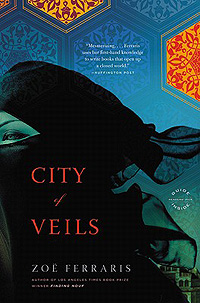
Zoe Ferraris lived for nearly a year in Saudi Arabia with her then-husband and his family of Muslim Saudi-Palestinians. Her novels set in the city of Jeddah feature a female lab technician in the coroner's office helping to solve crimes against women while battling prejudice and extreme religious conservatism in a culture where women's lives (and deaths) are shrouded in mystery.


In the novels of Julia Spencer-Fleming, ex-Army helicopter pilot Clare Fergusson becomes the first female Episcopal priest in a small town in upstate New York. While attempting to prove herself to more conservative members of her flock, she must also cope with her kindling attraction to the local (married) police chief, with whom she embarks on a series of criminal investigations.


And, of course, Laurie King's audacious and entertaining series introduces former theology student Mary Russell as protege, investigative partner, and ultimately wife to none other than Sherlock Holmes.

Sponsored by UCSC's Noel Q. King Memorial and Santa Cruz Public Libraries, "Higher Mysteries" takes place Tuesday evening, May 14, 7 pm, at the downtown branch of the SCPL at 224 Church Street.

Oh, and if you'd like to do a little prep reading to get in the mood (and who doesn't want another excuse to read?), here are some suggested titles:

Zoe Ferraris: Finding Nouf and City of Veils
Laurie King: A Monstrous Regiment of Women and A Darker Place
Sharan Newman: The Outcast Dove and Strong As Death
Julia Spencer-Fleming: In the Bleak Midwinter and Out Of the Deep I Cry

Tuesday, April 30, 2013

IN ABSENTIA

Like Ebenezer Scrooge time-traveling back to the jolly Fezziwigs' ball, but unable to join in. Like Stella Dallas watching tearfully from outside the church window on her daughter's wedding day.

 Like Woody Allen in Stardust Memories, trapped on a train full of gloomy characters out of a Munch painting as a party train full of laughing, drinking revelers passes by on the next track.
Yeah, that's kind of how I feel today. My novel, Alias Hook, is about to launch in the UK (official pub date is May 1, just hours away), but I'm over here on the other side of the Pond—far on the other side, since I'm in California—watching it all from a distance.

The books are even now being shipped from various UK-based online bookselling portals. The AH ranking on The Book Depository site has soared from mid-six figures about a week ago to high five figures.

(And my hearty, not to say groveling thanks to each and every one of you who actually pre-ordered a copy; you folks are the best!) But my basking must be done in absentia.

Of course, this is sort of typical of my personal adventures in publishing. The very first edition of my first published novel—which became The Witch From the Sea—was published in German, a language I do not read, let alone write, under the title Die heimliche Piratin. (And, no, it doesn't mean The Pirates Who Save People From Choking; literal translation, more or less, is The Secret Female Pirate.)

It was such a gorgeous production, in hardcover, with original cover art and a sewn-in red silk bookmark (!), it didn't even bother me (so much) that I had no clue what was going on between the covers, translation-wise. My first published book, I thought, and I didn't even write it!

At least when Alias Hook arrives, I'll be able to read it! And so will you. And I will be happy to take full blame for whatever shortcomings and outrages are discovered inside, because this time I wrote every word.

In the meantime, if you and/or yours are in the continental UK as we speak, or planning to visit any time in the next few months, feel free to check out Alias Hook at fine booksellers everywhere. Not literally, unless you happen see it in a library; I mean take a gander at it sitting on the shelf in all its glory.

Send me a photo of it in situ, and I'll think of something really nice to do for you in return!
Die heimliche Piratin, snapped by a globe-trotting friend in all its gorgeousness, on a bookshop shelf in Austria.

WATER BOYS

Great performances fuel riverside coming-of-age tale 'Mud'


This is what rehab looks like. No, not from drugs and alcohol; this kind of rehab happens when an actor known for a certain level or genre of work has the moxie to reinvent himself onscreen through some smart role choices. The actor here is Matthew McConaughey, and in Jeff Nicholls edgy, hypnotic Mud, he breaks out of B-grade action movies and rom-com Purgatory in a big way.

The tall tale that is Mud simmers with danger, disillusion, humor, and heart, and McConaughey's performance, smack in the center, radiates all of the above.

Imagine the rite-of-passage lyricism of Huckleberry Finn, laced with the Southern Gothic menace of Night of the Hunter, and you'll have an idea of the general tone of Mud. The setting is contemporary, but it's a timeless story of two 14-year-old boys growing up on the banks of the Mississippi River in rural Arkansas.

 Ellis (Tye Sheridan) lives on ramshackle houseboat with his taciturn fisherman dad (Ray McKinnon) and his restless mom (Sarah Paulson). His buddy, Neckbone (Jacob Lofland), lives in a trailer nearby, under the sporadic supervision of his uncle, Galen (Michael Shannon).

One day, on an uninhabited island in the river, they discover a hungry, disheveled stranger called Mud (McConaughey) with a snake tattoo down one arm, a pistol stuck in the back of his jeans, and a line of down-home patter.

Like a character out of folklore, Mud is larger than life. He lights bonfires for good luck, wears a wolf's tooth sewn into his shirt for "protection," and spins highly improbable yarns. McConaughey maintains the tension between dangerous and fascinating, while also making the character convincingly lovelorn and vulnerable. It's a lovely piece of work. The two boy actors are astonishingly good, as well. (Read more)

Monday, April 29, 2013

PERSONS of PINTEREST

Cristina Anselmo and Mike Ryan in The Lovers.
 JTC/SSC co-production an actors showcase


For the final offering of its 2012/2013 season, Jewel Theatre Company teams up with Shakespeare Santa Cruz to present an evening of two one-act plays by Harold Pinter. With popular performers Paul Whitworth, Mike Ryan and JTC Artistic Director Julie James onstage, and James and SSC Artistic Director Marco Barricelli handling directing duties, that's a lot of bang for the buck on the tiny Center Stage.

JTC continues to earn its reputation for presenting challenging, often unorthodox live theatre in the heart of downtown Santa Cruz, and the Pinter plays are no exception.  First up, The Lovers, is more overtly "Pinteresque," a snapshot of marital gamesmanship with a wry, acerbic edge. Its companion piece, One For the Road, is something completely different, a cold-blooded portrait of a political torturer.

What these tense, compact pieces have in common are the dishy roles they provide for the talent onstage.

Mike Ryan and Cristina Anselmo are both terrific in The Lovers. Button-down, bowler-hatted Richard leaves for his financial job in the City (ie: London) every morning after exchanging a few caustic remarks with stay-at-home wife, Sarah, about the "lover" she will be entertaining in his absence and the "whore" he will visit on his way home.
Paul Whitworth and Mike Ryan in One For the Road.

Their comments are so arch, the audience thinks it's all just talk—until we drop in on each of them later in the day and see what sort of shenanigans each is getting up to. Julie James directs the piece as a brisk fugue on marriage, sex, and identity, with a couple of nifty surprises, played out with wit and brio by Anselmo and Ryan.

A bit less user-friendly is One For The Road, directed by Marco Barricelli. It's set in an interrogation chamber in an unnamed place or time, where victims of severe political torture are ushered in to meet with the man running the show, Nicolas (Paul Whitworth). There's not much of a story (beyond man's capacity for inhumanity), and the piece is less a drama with a resolution than a character study.

But it's a great role for Whitworth, who excels at this kind of prowling menace thinly veiled as unctuous bonhomie. Ryan and James appear briefly as two of his victims, along with talented young Diego Hammana, a student at Mar Vista Elementary making his professional theater debut.

Also making her JTC debut is veteran SSC costume designer B. Modern. (I especially liked the navy blue dress with faux bolero top Sarah zips herself into for her tryst in The Lovers.) And as always, Ron Gasparinetti's thoughtful sets make maximum use of that most intimate Center Stage space.

This production runs through May 19. Click here for tickets and info!

Thursday, April 25, 2013

HAPPY DANCE TIME

Woo-hoo!

Just found out today that my novel, Alias Hook, has started shipping from its various online portals. The books (or the Hooks) are in the mail!

This is me doing the happy dance! (Okay, it's really Isadora Duncan, but you get the general idea...)

This first edition is coming out via my intrepid British publisher, Snowbooks, in the UK only. But it's available online as we speak over at The Book Depository for $US. Sadly, since the book started shipping today, it can no longer be offered at the insanely great pre-order price of $9.01. The current discounted price is $11.23, but that still includes FREE shipping worldwide!

If you're wondering what it's all about, Alfie, head over to my Alias Hook Facebook page for snippets, links, and cool illustrations!

FUTURE IMPERFECT

Hollywood's love affair with the post-apocalyptic future of Earth continues in Oblivion. Co-written and directed by Joseph Kosinski, adapted from his own graphic novel, the story gives us a devastated landscape that used to be New York City, a human worker bee who survived the holocaust, and has begun to question his mission, and a lot of really cool high-tech CGI machines that pivot around in mid-air and shoot from all directions. (No surprise that Kosinski's last film was the video-centric TRON: Legacy.)

If you know your dystopian sci-fi stories, Oblivion doesn't have a lot of surprises, plot-wise. And while Kosinski's visual canvas is large, and his themes epic, there are more than a few times when the storytelling plods onscreen, where narrative urgency gets lost amid all the gadgetry and prolonged shootouts. Still, the ideas are always interesting, the movie looks great, and Kosinski spins an eerie sense of contemplative yearning that keeps the viewer involved.

It's 2077, fifty years after a nuclear war with alien invaders turned most of the Earth into a desert of windswept rubble. "We won the war but lost the planet," says maintenance technician Jack Harper (a plausible enough Tom Cruise); he lives in a tower high above the surface servicing the drone machines extracting the last of Earth's usable resources for the remaining humans who have relocated to a moon of Jupiter. (Read more)

Wednesday, April 24, 2013

HAPPY BARD DAY

5 Favorite Bard-Worthy Shakespeare Adulterations

Was ever an artist more open to radical interpretations of his work—and in so many media—as William Shakespeare?

All of life is encompassed in Shakespeare's plays and sonnets, which continue to inspire and influence creative artists 400+ years later. I'm a day late for his official birthday, but there's still time to share some of my favorite interpretations of Shakespeare's life and times, as well as adaptations of his work.

Romeo and Juliet (film, 1968)

From the heyday of the hippie era, Franco Zeffirelli's luscious teenage romance (starring luscious teenagers Leonard Whiting and Olivia Hussey) could not have been more contemporary—although set in an utterly ravishing Renaissance Verona.

It helps—hell, it's almost essential—to have seen this as an impressionable 16-year-old girl, as I was. I wrote a lot of awful love poetry for a few weeks afterward, and produced this brooding watercolor and India ink composition. (Long on atmosphere, although sort of an architectural disaster...) But this is the thing abut Shakespeare—you get so caught up in the drama you can't help chiming in!


Shakespeare In Love (film, 1999)

Don't mistake this for a history lesson, kids. But do enjoy it as a rollicking romantic comedy that imagines two weeks in the life of young Will Shakespeare whilst writing his first great play.

With crisp comic direction by John Madden, a sparkling script co-written by Tom Stoppard, a delightful supporting cast (Judi Dench, Geoffrey Rush, Rupert Everett) and all the raucous pageantry of the Elizabethan Age, it's a frisky comedy and a wry meditation on art, life and the creative impulse.


Ink & Steel (novel, Elizabeth Bear, 2008)

This first book in "The Stratford Man Duology" (coupled with the equally exquisite Hell & Earth), by sci-fi/fantasy writer Elizabeth Bear, envisions an extra-teeming Elizabethan England in league with the underground world of Faery to suppress the forces of Dark Magic.


Will Shakespeare is pressed into service to work protective magic into his verse as a reluctant, but brilliant replacement for verse-master Christopher Marlowe, recently deceased—but newly resurrected in Faery. A triumph of poetry, audacious eroticism, tenderness, and unfettered imagination.


 The Tempest (San Francisco Ballet, 1981)

The jewel in the crown from Michael Smuin's tenure as Artistic Director of SFB, this lavish full-length ballet based on Shakespeare's last play has it all—Smuin choreography, a lovely original musical score by Paul Chihara, sprightly humor, wistful melancholy, and enough pageantry and spectacle to make Shakespeare himself weep with delight.

Best of all it has the incredible David McNaughton as the least earthbound Ariel you will ever see without special effects!

I'm sure this must be available on DVD (it was televised on Dance in America on PBS in the '80s), and it's well worth tracking down. I was lucky enough to see it live on stage at least two or three times, and it was magical every single time.


 The Shakespeare Oracle (Tarot deck, 2003)

Hey, remember what I said about diverse media! Okay, I'm a big fan of Tarot decks, and this is one of my favorites. I especially love the artwork by Cynthia von Buhler—simple, yet effective. And I like the way author A. Bronwyn Llewellyn matches up Shakespearean characters with the Major Arcana.

Sure, Shakespeare himself as The Magician, Feste as the Fool, and Romeo and Juliet as The Lovers are no-brainers. But Katharina and Petruchio, from Taming of the Shrew—together—as the Strength card, and Puck as The Devil are unexpectedly clever!


But wait! I didn't even mention Christopher Moore' comic novel, Fool, a hilarious, lewd, yet strangely poignant riff on King Lear. Or Neil Gaiman's outstanding  A Midsummer Night's Dream, a graphic novel from his landmark Sandman series (collected in Sandman Volume Three; Dream Country), in which Shakespeare's acting company performs The Dream outdoors on a moonlit night for an audience of genuine fairy royalty and their court.

Well, I could go on and on, and I'm sure you could too. the point is, Shakespeare leaves us an inexhaustibly rich legacy that continues to morph, mutate, and reinvent itself from one age, generation, and medium to the next. A legacy well worth celebrating—even one day late.

Tuesday, April 23, 2013

GOOD IMPRESSIONS

Luscious Renoir is a painting come to life


For everyone who's ever wished they could stroll right into the middle of a lush, sun-drenched Impressionist painting by Pierre-Auguste Renoir, the French film Renoir is the next best thing.

Filmed on location in the south of France, where Renoir lived and painted in the last twenty years of his life, Gilles Bourdos' visually intoxicating film is alive with the extraordinary light and vibrant colors of both the natural world and the robust female forms that distinguish the painter's most beloved work.

True, the storyline rarely rises above Art Bio 101, but it doesn't have to, when every frame of film is such a living, breathing homage to the maestro's work.

 In 1915, the elderly Renoir (Michel Bouquet) has retired to a farmhouse in the verdant countryside above the French Riviera.

So arthritic, he needs gauze tied around his gnarled hands to support the paint brush, and assistants to mix the colors, he is attended by half a dozen competent women—maids who began as models, and vice-versa—who do all the heavy lifting. Literally, they carry the painter in his wheelchair from the farmhouse up the hill to his painting atelier every day; they also do all the cooking and housekeeping for "the Boss."

Along comes Andree (Christa Theret), a pert young redhead with a pearlescent complexion and a modern attitude, to pose for the Boss. Soon, the painter's son, Jean (Vincent Rottiers)—beloved by all the household women—comes home from World War I to convalesce after being wounded at the Front. As blasé as Jean usually is about his father's nude models, the provocative Andree gradually lights a fire under Renoir fils as well.

Father-son dynamics, the suppressed rivalries, resentments, and regrets of family life, erotic young love, and the eternal conflict between the beauty of life and the ugly insanity of warfare are all tossed into the simmering cassoulet of the plot.

Factor in some lovely life-sized women, exquisite fabrics, and voluptuous food, and you have a recipe for one tantalizing visual feast. (Read more in this week's Good Times)

Friday, April 19, 2013

IT'S A (BOOK) WRAP

File this one under Way Cool!

My wonderful book designer over at Snowbooks, Anna Torborg, just sent me this e-file of the wraparound front and back cover of my new novel, Alias Hook.

In the publishing biz, they call this a "full flat." And, as Anna reminds me, on the finished book (at the printer's, as we speak), the yellow bits will be shiny gold foil and the white script letters will be embossed.

I've already rhapsodized over the front cover design. But this is my first look at the back cover—complete with jacket quotes, for which I bow down in extreme gratitude to my intrepid blurbists, Laurie King, Broos Campbell, and C. C. Humphreys. (Ed. note: you folks rock!)


Pub date is May 1 in the UK. But you can pre-order a copy for $US online at The Book Depository (with free shipping worldwide).

Color me stoked!

Thursday, April 18, 2013

WONDER CON

You could never accuse filmmaker and master craftsman Terrence Malick of oversaturating the marketplace. There's never been any less than a five-year interval between the six films he's made in the last 40 years (and usually much longer)—until now. Hot on the sprockets of The Tree of Life, from 2011, comes Malick's latest, To The Wonder. And now we know once and for all why he should never, ever be rushed.

To the Wonder plays like a series of outtakes from the previous film. Once again, there is a young woman with lots of hair (Olga Kurylenko) given to twirling round and round bathed in sunlight, often with lengths of windblown sheer chiffon billowing across her face.

Once again, she is partnered by a stoic male presence (Ben Affleck), who, although less dangerous than Brad Pitt's father/husband in Tree of Life, gives every appearance of being quite the killjoy. Yet again, they are stranded together somewhere out on the lone prair-ee (in this case, suburban Oklahoma), trying and mostly failing to sync up with each other.

It's as if Malick didn't have time to invent new characters, so decided instead to recycle the same elemental female vs. uptight male dynamics from the last film. It's meant to be an impressionistic tone poem about the ebb and flow of love, I get it, but these cardboard figures in a landscape we know or care nothing about seem incapable of so strong an emotion.

(It's up to the stirring music of Henryk Gorecki and Arvo Part to provide any emotional context.) (Read more)

I still say Malick's 2005 film, The New World, was the best movie of its decade. But in that tale of English Puritan settlers and Native American tribal societies encountering each other for the first time in the first European colony in Virginia, the chaotic impressionism and interior monologue devices worked brilliantly. With two cultures unable to communicate with each other verbally, the viewer was plunged into the eerie strangeness of first contact, exactly as the people involved must have experienced it—sensory, frightening, rapturous and exalted.

In a modern context, like To the Wonder, when characters stubbornly refuse to talk to each other? Not so much. Such a disappointment.

Sunday, April 14, 2013

WRITE FIRST...

Once, I heard a very wise author dispense some sound advice about writing historical fiction: "Write the story first, and do the research later."

No, she wasn't advocating blissful ignorance. Of course, you don't want to set a story in a time and place you know absolutely nothing about, but if you didn't have at least a nodding acquaintance with your era, you wouldn't be inspired to write about it in the first place.

The gist of her argument was that you need to get your story down in a headlong rush—dramatic highlights, pivotal encounters, the shape and scope of the plot—before distracting yourself with the details. It won't be perfect; the first draft never is, but you can seed in the facts later. First you have to tell yourself the story.

But start out with the research, and chances are you'll be overwhelmed. Maybe diving into the history is so much fun, it eclipses everything else. Maybe events in the historical record don't play out quite the way you imagined, or contradict your ideas. Maybe the sheer enormity of research material starts to make your puny story seem insignificant by comparison, or the massive accumulation of detail starts to knead your tidy little idea into a gigantic, amorphous, Blob-like thing as you try to fit them all in.

In any case, your story as originally envisioned might get completely lost. Or you may become too paralyzed to write it at all.

My current WIP is the third installment of a trilogy, so I'm already familiar with the period, in a general way. And my characters are eager to jump on the page and start interacting. The writing goes pretty fast until I get bogged down in details about, say, the textile trade in Leeds, or the patent theatre system in Georgian London, things I don't seem to know off the top of my head. Things that may only be important for a scene or even a sentence or two.

So now, in the interest of progress, I leave a parenthetical note to myself in the text, along with a companion note in a separate doc of Stuff to Look Up. I write in the mornings, so if I have time in the afternoon, I might devote an hour to poring through info on these very particular subjects.

But if not, I'll get to them all later, after the first draft is done. The main thing now is to find out where the story is going; once that's done, making adjustments to accommodate the details will be far less daunting.

So when that first, elusive phantom of a story wavers into your brain, type first and ask questions later.

Tuesday, April 9, 2013

MEMORIAL DAY

This was the Santa Cruz Beach Bandstand, July, 1987.

And that's me interviewing the late Annette Funicello, along with Frankie Avalon, who were in town to promote their retro-beach party movie, Back To the Beach. They were both charming and professional, answering questions that they must have already answered a dozen times that day as if they'd never heard them before.

Annette was particularly kind when this young reporter's lips got stuck to her teeth in mid-sentence in the fierce, drying winds up on the Bandstand! (It may be sunny, but notice Annette's fur wrap, brrr…) She was a very gracious class act.

...And still more from the annals of Brenda Starr, Girl Reporter…

The great Les Blank was the subject of one of my very first (and almost last) interviews. He did not exactly regale a reporter with stories; serious and self-possessed, his answers tended to be one syllable or less and to-the-point. I was completely intimidated.

But that was his approach. He didn't tell you what to think or feel about his films, they just had to be experienced…and what an experience they were!

Burden of Dreams about Werner Herzog's obsessive quest to film Fitzcarraldo in the wilds of Peru may have been his highest-profile doc. But my favorite is probably Always For Pleasure in which the various crews from rival wards in New Orleans vie with each other to create the most extravagant Mardi Gras floats and costumes. It was shown around town at venues like the old Sash Mill Cinema & Cafe or The Good Fruit Company, where there was always a pot of red beans and rice simmering away in the kitchen, to get the audience in the proper mood.

Unlike his friend and cohort, Herzog, Les Blank never inserted himself into his docs; he let his subjects tell their own stories. He leaves a legacy of distinctive films that celebrate the intersection of food, music, and culture along the most fascinating back roads of Life.

Tuesday, April 2, 2013

OPPOSITES ATTRACT

Love vs. gravity in charming, but implausible sci-fi romance 'Upside Down'

If Upside Down were in print, it would be an outline, not a complete novel. The grand sweep of the story is there, the big, climactic scenes are all plotted out exactly where they should be, and marvelous, fanciful, poetic images decorate key passages.

What's missing from Juan Solanas' ambitious, interplanetary sci-fi romance are the details—the solid conceptual underpinning that would make it all plausible, and a final polish on the dialogue that would bring the characters and their unique story to life.

In an alternative solar system, two unnamed planets are locked in an eternal pas de deux. They are so close together, the landscape of each planet is visible hovering in the sky above the other, but the opposing gravitational forces keep the inhabitants of each planet firmly rooted to their home world. Although at certain high altitudes, the twin worlds almost touch, intermingling between those "Up top" and those "Below" is strictly verboten by law and custom.

A rigorous caste system has developed between the sophisticated, high-tech Up Worlders and their counterparts Below—which is basically a windswept slum.
But  Down World boy, Adam (Jim Sturgess), and Up World girl, Eden (Kirsten Dunst), are teenagers in love. They've figured out a system of ropes and weights allowing them to defy law and gravity to spend stolen time together.


(In one of many charming visual moments, Eden attaches herself to the underside of a jutting crag, like a bat, obeying the gravity of her own planet, to stay put long enough for Adam to kiss her.) (Read more)


I so wanted to give this movie an extra star for sheer audacity, but I just couldn't do it. It has so many lovely images and ideas, but the science is iffy, a best, and so much of the dialogue sounds made-up on the spot (and not in a good way). Still, sci-fi fans may want to check it out just for the cool visuals.

(Oh, and btw, if they every make a movie of Paul McCartney's life story, Jim Sturgess is ready for his close-up.)